

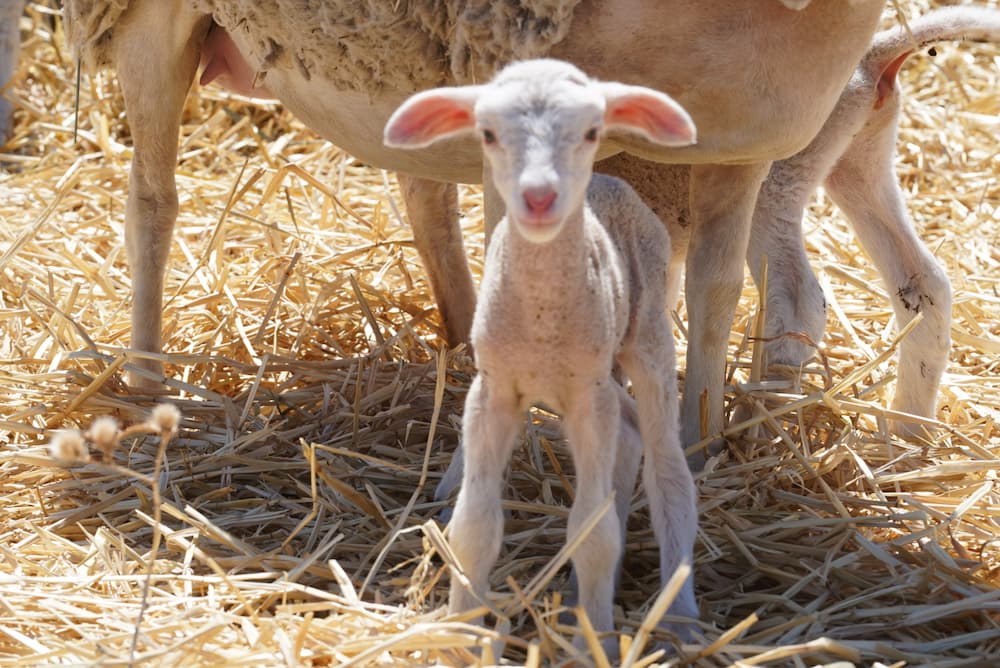
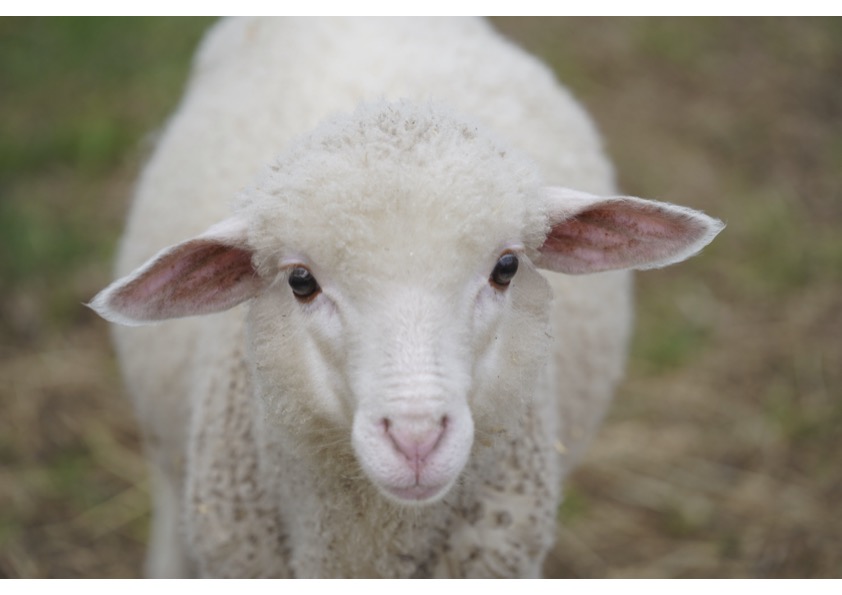
Castrating lambs is one of those farm practices that deserves careful thought. If castration is necessary, we owe it to the animal to consider not only how quickly and conveniently the procedure can be carried out, but also how much pain it may cause during the hours and days that follow.
The two most common approaches are rubber-ring castration—often called banding—and surgical castration. Neither method is pain-free, and each has advantages and risks.
The first question should be whether castration is necessary at all. Lambs destined for slaughter before puberty may not need to be castrated, depending on the production system, market requirements and how the flock is managed.
When castration is required, Australian industry guidance recommends carrying it out while lambs are young and using appropriate pain relief. Meat & Livestock Australia recommends castrating at around two to eight weeks of age and currently identifies rings used with pain relief as the preferred method for most commercial situations. Farmers should also check the rules that apply in their own state or territory and seek advice from their veterinarian. Meat & Livestock Australia
Banding is fast, bloodless and relatively easy to perform when the operator is properly trained. There is no open surgical wound, less equipment is required, and there is a lower risk of blood-borne disease passing between animals.
A rubber ring is placed around the neck of the scrotum above both testicles. It stops the blood supply, causing the scrotum and testicles to gradually die and eventually fall away.
Those practical advantages explain why rings are used so widely. However, “bloodless” should not be confused with “painless.”
Research has shown clear pain and discomfort following ring castration. The ring creates sustained pressure and loss of blood supply, followed by inflammation and tissue death. The strongest visible pain behaviours may occur during the first few hours, but healing takes considerably longer. Some research has identified swelling, sensitivity and lesions well beyond the day of marking. MLA research review
There are also practical risks. Both testicles must be below the ring, and the lamb’s teats must remain above it. Incorrect placement can result in incomplete castration or serious injury. Tetanus protection, clean equipment and ongoing observation are important.
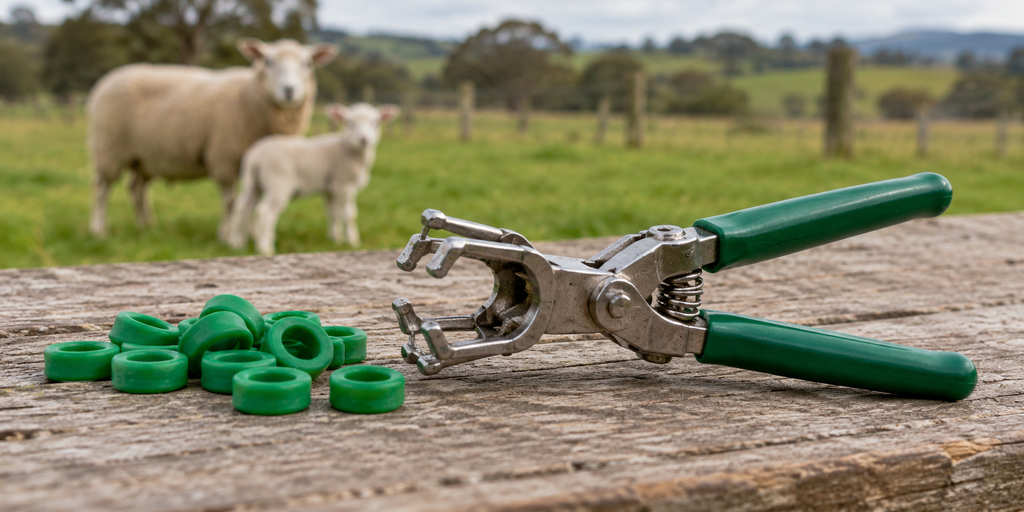
There can be confusion between the different pain-relief products available.
The Numnuts system applies a rubber ring while injecting a local anaesthetic called NumOcaine. This is not simply a gel placed on the skin. The local anaesthetic significantly reduces the immediate pain associated with applying the ring, which is a worthwhile welfare improvement.
However, local anaesthetic is short-acting. Australian guidance indicates that lignocaine generally lasts approximately 45 minutes to one hour. It cannot be expected to cover all the discomfort associated with the inflammation and gradual tissue changes that follow ring application. Agriculture Victoria
Tri-Solfen is a topical anaesthetic and antiseptic formulation used on an open wound. It may be useful with surgical castration but is not suitable for ordinary ring castration because there is no wound onto which it can be applied.
For ring castration, MLA advises that combining the injected local anaesthetic used by Numnuts with an appropriate longer-acting anti-inflammatory such as meloxicam provides the best pain coverage among currently registered options. Products must always be used according to their labels and veterinary advice. MLA pain-relief guidance
This is the important point: numbing the area while the ring is applied does not necessarily manage all the pain that may occur afterwards.
Surgical castration removes the testicles immediately through an incision. Its disadvantages are obvious: it creates an open wound and can cause acute pain, bleeding, infection and flystrike. It requires excellent hygiene, competent technique and careful postoperative monitoring. It is also slower and generally more expensive than applying rings.
Yet surgery has one potential advantage that is sometimes overlooked: once the testicles have been removed, there is no prolonged period in which tissue below a ring slowly loses its blood supply.
On our property, surgical castration is performed with light sedation and pain management. In our experience, the lambs generally get up and walk around soon afterwards, apart from some initial grogginess from the sedation. They also receive longer-lasting pain relief for the following three days. Any antibiotic use is based on veterinary direction and our animals’ individual infection risk.
That experience matters, but normal-looking behaviour does not prove that an animal is completely free of pain. Sheep naturally tend to conceal vulnerability. Their posture, feeding, movement, response to touch and interaction with their mothers should all be considered during recovery.
Surgery should therefore never be regarded as a painless shortcut. Its welfare outcome depends heavily on the lamb’s age, the operator’s ability, cleanliness, anaesthesia, postoperative pain relief and follow-up care.
Rubber rings offer speed, simplicity and a bloodless procedure, but they cause pain through sustained constriction, inflammation and tissue death. A local anaesthetic can greatly reduce the immediate pain, although its effect is short-lived.
Surgery causes a sharper and more immediate injury, together with the risks associated with an open wound. When performed properly with sedation or anaesthesia, local or topical anaesthetic and longer-lasting systemic pain relief, recovery can be rapid and the prolonged tissue-death stage associated with rings is avoided.
That does not make one method universally better in every flock. Lamb age, property conditions, fly and tetanus risk, operator competence, veterinary access and the complete pain-management plan all influence the result.

The discussion should not be reduced to “rings versus a knife.” A more useful question is:
Which method, combined with which pain-management and aftercare plan, will cause the least total suffering for this lamb?
Good practice should include:
Pain visible at the moment of castration is only part of the welfare picture. Pain that continues after the lamb leaves the cradle matters too.
Rubber rings may be convenient, and modern local anaesthetic systems are a definite improvement. But it is reasonable to question whether short-term numbness alone is enough for a process that continues long after the anaesthetic has worn off.
Whatever method we choose, the aim should be more than getting the job done. It should be to minimise pain for the entire procedure and recovery—not only for the first few minutes.