


Wool Is Not a Victimless Product: The Hidden Cost Behind Australia’s Sheep Industry
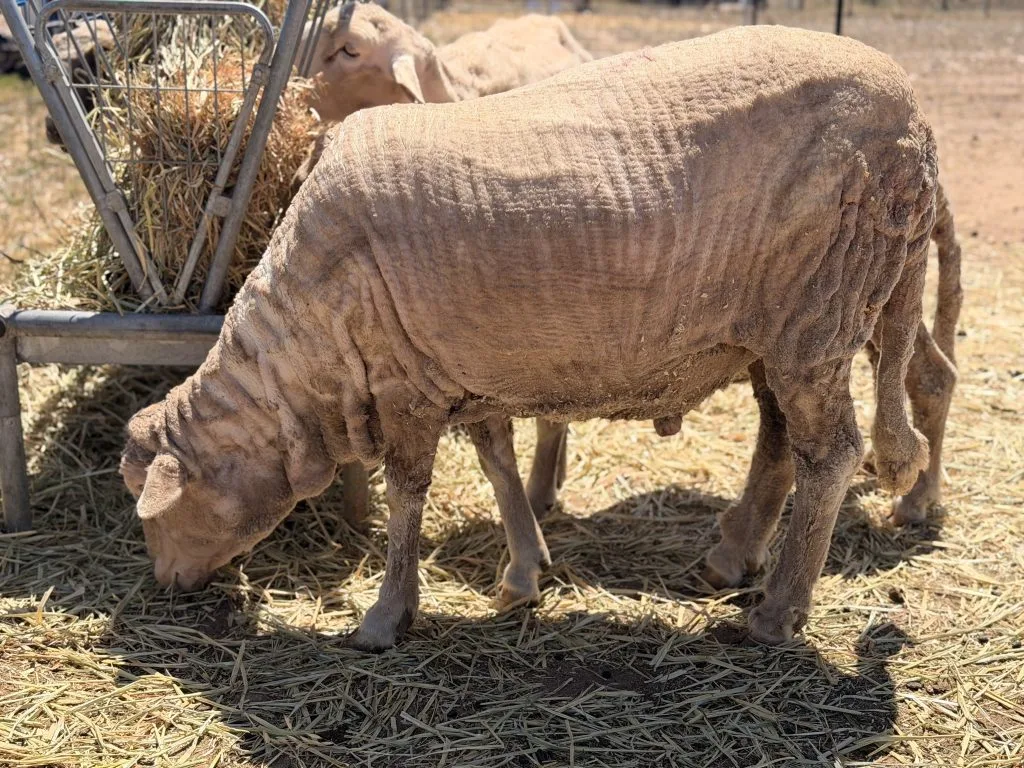
When most people picture wool, they imagine something soft, warm and “natural.” What many don’t see is the painful history behind how modern sheep have been bred, and the suffering that continues in shearing sheds today.
Selective Breeding Has Changed Sheep Forever
Sheep were not always the animals we see in Australia now. Over decades, humans have selectively bred them to grow far more wool than their bodies naturally needed. One of the clearest examples is the Merino.
The Merino Problem
Australia’s Merino sheep have been deliberately bred to develop:
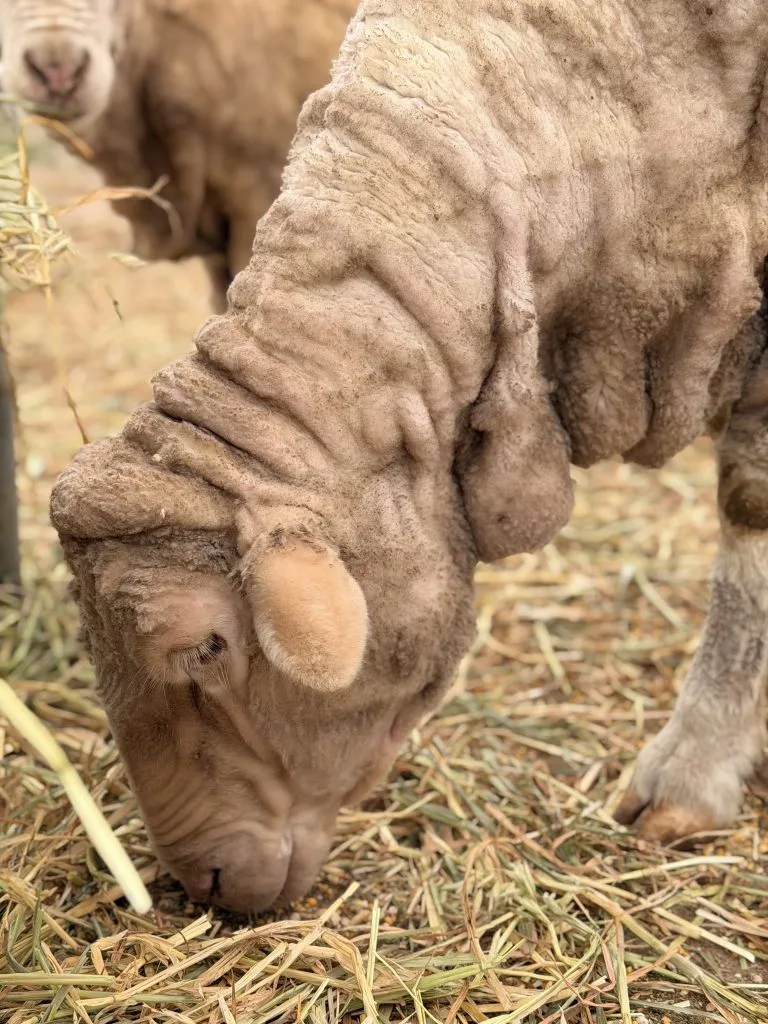
These folds trap heat, moisture and dirt — making life extremely uncomfortable and creating higher risk for flystrike. While they increase wool yield for industry, they make life harder for the sheep who must carry them.
And the scale is enormous.
Australia produces over 300 million kilograms of wool every year, and more than 70 million sheep are shorn annually.
Behind every kilogram of wool is a living, feeling animal who had no choice.
Shearing: Fast, Forceful and Often Traumatic
Shearing a sheep with multiple skin folds isn’t simple — and speed is everything in commercial sheds. Shearers are often under pressure to get through hundreds of sheep a day, and injuries are considered routine.
We’ve heard it from shearers themselves:
In many shearing sheds, a needle and thread sit in the woodwork — not for fixing clothing, but for stitching up the sheep they accidentally cut.
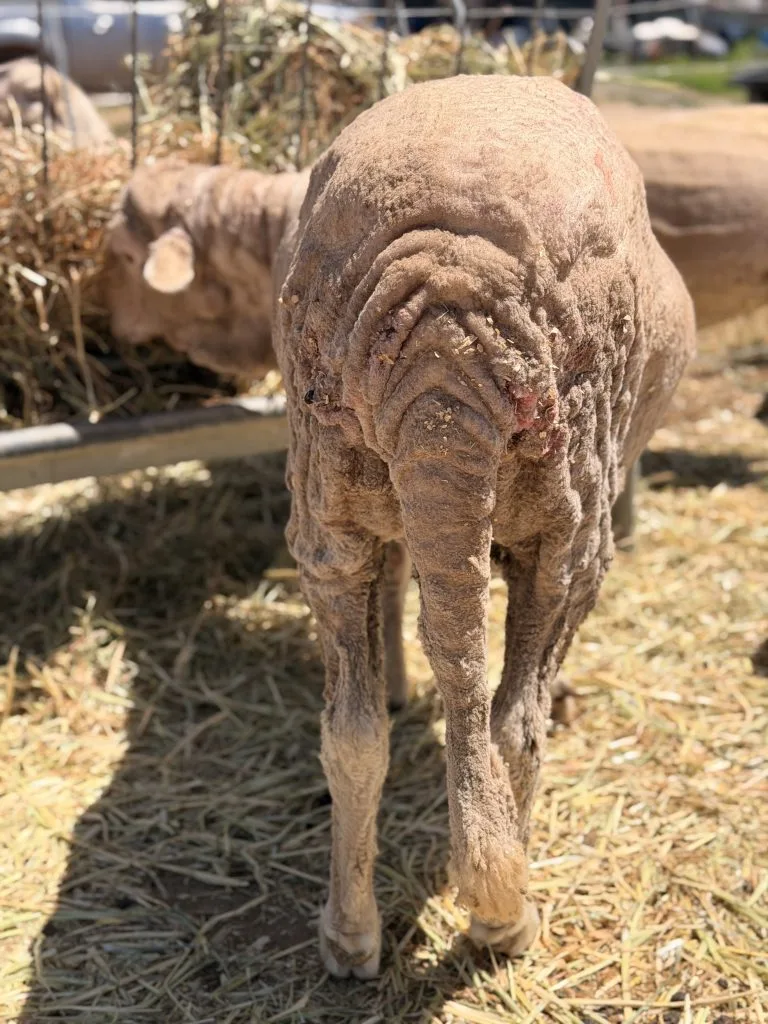
Those deep folds catch in the clippers. Cuts happen fast.
Stitching happens faster.
And the sheep is pushed out so the next one can be dragged in.
These animals feel every slice, every rough grab, every moment of fear.
Wool Isn’t “Cruelty-Free”
We are often told that wool is natural, sustainable and harmless. But there is nothing natural about selectively breeding animals to produce excessive wool, or normalising the injuries that come with removing it.
Wool comes with:
The truth is simple:
Wool is not a victimless product.
It comes at a cost — and the sheep pay it.
Sanctuary Shows Us a Better Way
At Freedom Hill Sanctuary, we see what life looks like when sheep are treated as individuals, not commodities. Their wool grows in peace. They are shorn gently and slowly, only for their comfort — never for profit.
Here, every sheep is someone.
Every fleece belongs to a life, not an industry.
“Wool is not a victimless product – the victims are just kept out of sight.”
Photo ~ Our darling Buddy